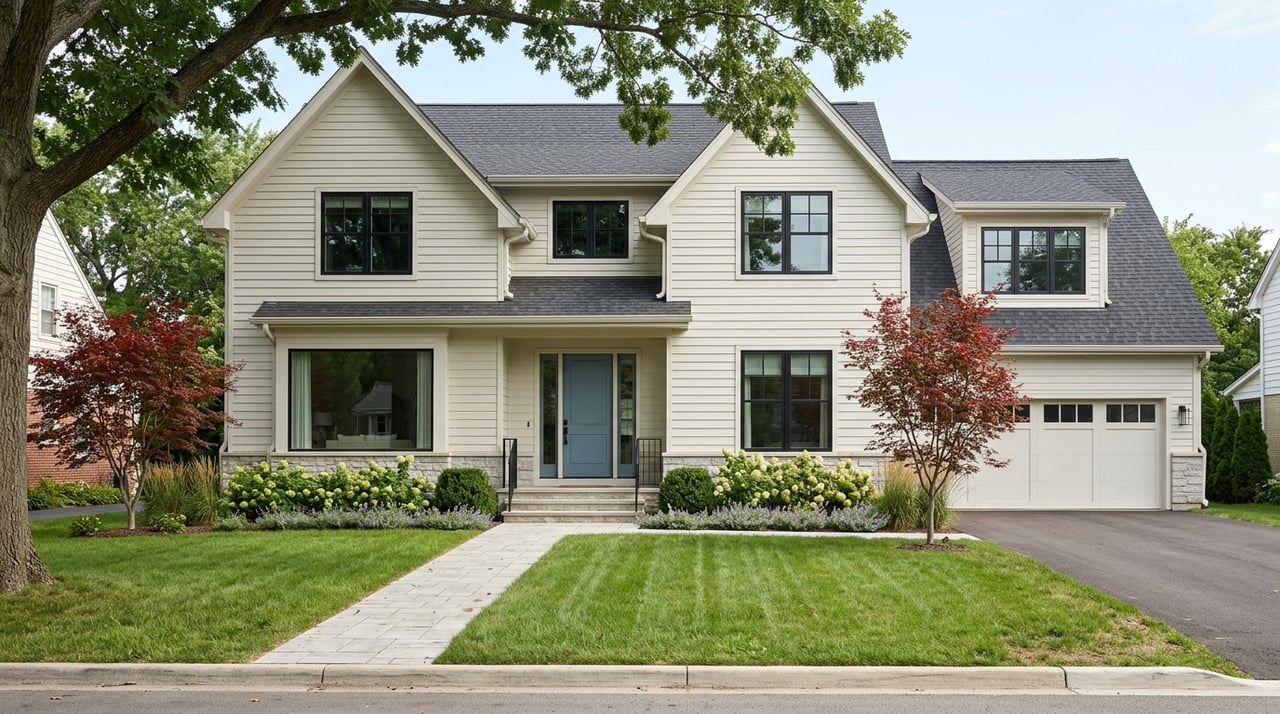
Your Move-Up Home Plan in Havre de Grace
Ready for more space, but not sure how to make the timing work? If you own a starter home in Havre de Grace and want to move into your next long-term property, you are not alone. The jump from one home to the next can feel complex, especially when you are balancing equity, mortgage rates, showings, and the pressure of buying before the right home disappears. The good news is that with the right plan, you can make a move-up transition with far less stress. Let’s dive in.
In Havre de Grace, the resale market has been moving at a steady pace. Over the three months ending May 2026, Redfin reported a median sale price of $399,751, about 23 days on market, an average of one offer per home, and a sale-to-list ratio of 100.4%. In May 2026, Harford County’s median sale price was $423,729.
That matters if you are moving from a starter home to a forever home. In a market where homes can move in a few weeks, you usually want to sort out your financing, equity position, and sale strategy before your current home goes live. Add in Freddie Mac’s average 30-year fixed mortgage rate of 6.49% as of June 25, 2026, and planning becomes even more important.
Before you tour larger homes, take a close look at what your current home may contribute to the next purchase. Your equity can shape your down payment, closing costs, monthly payment, and how flexible you can be when making an offer.
Pre-approval is just as important. If your current home has not sold yet, your lender may need to evaluate whether you can qualify while still carrying that mortgage along with the new one. Starting early helps you understand your options before you are making decisions under pressure.
Fannie Mae allows anticipated sales proceeds in some cases when your current home is listed but not yet sold. It also allows bridge or swing loans as an acceptable source of funds when the loan is not cross-collateralized against the new property and the lender documents your ability to carry the new home, the current home, the bridge loan, and your other obligations.
That can create flexibility, but it does not mean every buyer will qualify the same way. If your current principal residence is pending sale but will not close before your new purchase, your current housing payment generally still must be counted unless the lender has an executed sales contract and confirmation that financing contingencies have been cleared.
One of the biggest mistakes move-up buyers make is treating the sale and purchase as two separate projects. In reality, they work best when managed together. A clear sequence can help you protect your timeline and reduce surprises.
A practical move-up sequence in Havre de Grace often looks like this:
This kind of project-based approach fits the local market and the way lenders review pending sales and ongoing debt obligations. It also helps you stay calm when multiple pieces are moving at once.
Every move-up buyer wants the same thing: enough flexibility to sell well and buy confidently. The best path depends on your finances, risk tolerance, and the gap between your two closings.
If your home is listed and the numbers work, anticipated sale proceeds may help support your next purchase. This can be useful when much of your buying power is tied up in your current home.
Still, lender documentation matters. You will want clear guidance on what is required, what can be counted, and what must wait until closing.
Bridge financing can help when you need access to funds before your current home closes. Under Fannie Mae guidelines, bridge or swing loans may be acceptable when they are not cross-collateralized against the new property and when the lender documents your full ability to carry all related obligations.
This can be a practical tool for some households, but it is not automatic. The payment impact and approval standards should be reviewed early so you know whether it truly improves your position.
Sometimes the issue is not financing. It is timing. If you sell first but need a little more time before moving out, a seller rent-back arrangement may help create breathing room.
Fannie Mae permits rent-back credits, but those credits cannot be used as eligible funds for your down payment, closing costs, or reserves. That makes rent-back useful for occupancy planning, not a substitute for cash needed to close.
When you move up, the purchase price is only part of the financial picture. Local taxes and transfer-related costs should be part of your budget from the beginning.
Havre de Grace’s current city property tax rate is $0.565 per $100 of assessable real property. Harford County charges a 1% transfer tax plus a recordation tax of $6.60 per $1,000 of recorded value. Maryland’s state transfer tax is typically 0.5% in standard sales and 0.25% for qualifying first-time Maryland homebuyers.
Maryland law also presumes that recordation and transfer taxes are shared equally unless the contract says otherwise. In addition, for properties in Havre de Grace, the deed must be stamped by the municipality before it is sent to county collections.
If the home you are buying will be your primary residence, the Maryland Homestead Property Tax Credit is worth understanding. For eligible owner-occupants, it limits taxable assessment increases on a principal residence to 10% or less each year.
Maryland requires a one-time Homestead application to establish eligibility. If you are buying your long-term home rather than a second home or investment property, this is one of those ownership details that should be handled early.
Not every part of Havre de Grace offers the same housing mix. If you are searching for more square footage, newer construction, or upgraded finishes, it helps to narrow your search based on housing type and lifestyle priorities.
The city’s adopted 2025 comprehensive plan emphasizes housing, transportation, water, sensitive areas, historic resources, and community facilities. Local tourism and community materials also highlight waterfront trails, scenic parks, golf, and the arts. In practice, that means your move-up search may be less about one broad market and more about finding the right pocket for the way you want to live.
Bulle Rock stands out as one of the clearest move-up options in the area. The community describes itself as a luxury-oriented community with custom single-family homes, villas, and condominiums, and one current builder page listed single-family homes starting at $529,990.
Seneca Shores is a more limited niche option. It has been advertised with just five waterfront homesites and custom homes from $998,000. Based on available inventory, buyers looking for higher-end finishes, larger homes, or more recent construction may find more options in planned golf-course or waterfront settings than in the historic core.
A move-up transition is not just a transaction. It is a logistics project. The smoother your daily routine stays, the easier the process feels.
Havre de Grace offers more than 3,000 acres of state, county, and local parkland, along with the Joe K Trail and the Promenade. The city’s transportation chapter notes MTA commuter bus service, Harford Transit LINK, and nearby rail access through Aberdeen and Perryville. The Community Center also highlights access to I-95, Route 155, and Route 40.
Those connections can make a real difference while your home is on the market or if there is a gap between closings. They can help with commuting, coordinating movers, and keeping your routine functional while you manage the transition.
Moving from a starter home to a forever home in Havre de Grace can absolutely be done well, but it usually works best when the process starts sooner than you think. In a market where homes move quickly and borrowing costs still matter, your edge comes from preparation.
That means understanding your equity, lining up financing, budgeting for taxes and closing costs, narrowing your home search, and building a realistic occupancy plan. With the right guidance, you can approach the move with clarity instead of chaos.
If you are thinking about your next move in Havre de Grace, Rose Calderone & Co. can help you build a step-by-step plan for selling, buying, and coordinating every detail in between.
Stay up to date on the latest real estate trends.


With deep knowledge of the Nottingham market, we deliver expert guidance, proven strategies, and results-driven representation. Work with trusted real estate professionals dedicated to helping you achieve your goals.
ROSE CALDERONE & CO.
7939 Honeygo Blvd #124 Nottingham, MD 21236