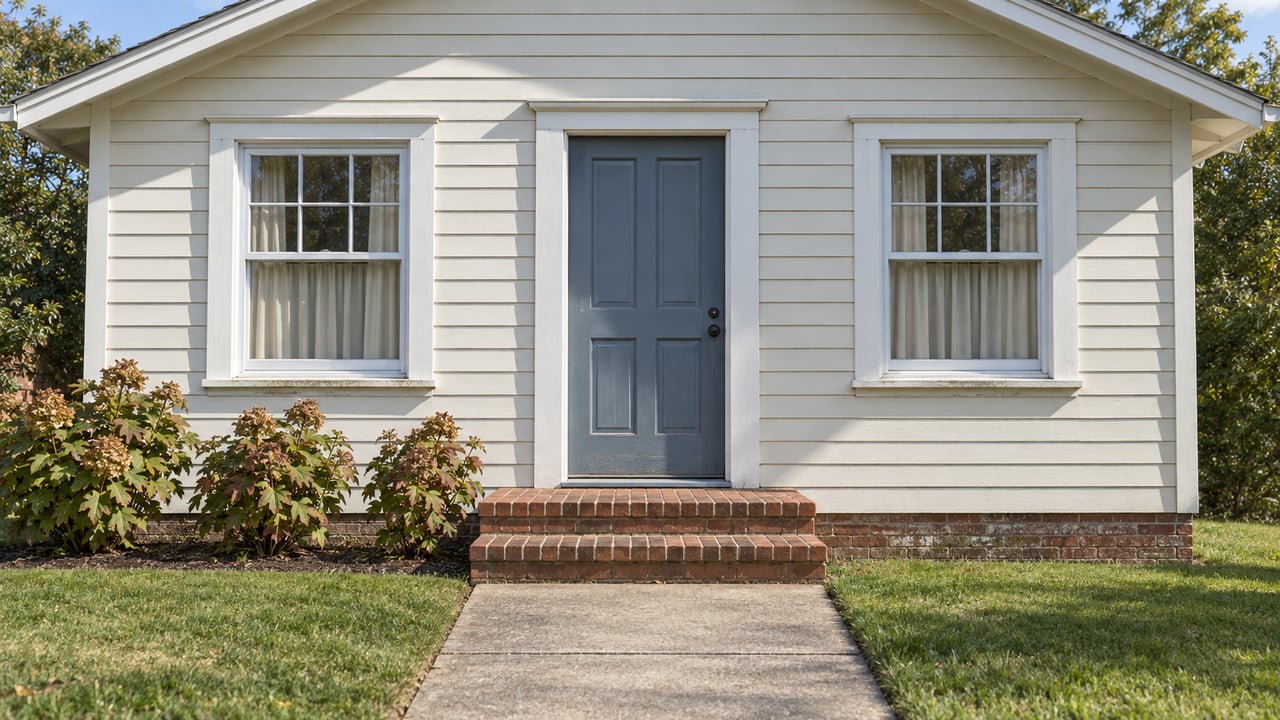
The State Is Paying to Repair Three Havre de Grace Landmarks. All Three Are Still in Use.
In February, the Maryland Commission on African American History and Culture and the Maryland Historical Trust announced 29 African American Heritage Preservation Program awards. Together they were worth $5 million for fiscal 2026, and individual grants ranged from $10,000 to $250,000. Three of those awards went to Havre de Grace, for a combined $534,000. The HdG Beacon reported the total in mid-September, seven months after the state's announcement.
What the three have in common matters more than the dollar figure. None of them is a ruin waiting to become a museum. One is a museum that still runs festivals to pay for its restoration. One is a church with services every Sunday. One is a lodge hall that hosts food drives. The state money pays for specific repairs at each building, and none of the projects has a published completion date. If you want to see these places, you go through the people who run them.
| Building | Sponsor of record | Award | What it pays for |
|---|---|---|---|
| Havre de Grace Colored School, 555 Alliance St. | Havre de Grace Colored School Museum and Cultural Center, Inc. | $147,000 | Slate roof rehabilitation |
| St. James A.M.E. Church, Gravel Hill Road | St. James A.M.E. Church of Gravel Hill Road, Inc. | $137,000 | Church rehabilitation and cemetery conservation |
| Masonic hall in the National Register Historic District | Most Worshipful Prince Hall Grand Lodge F. & A.M. of Maryland & Its Jurisdiction, Inc. | $250,000 | Structural repairs to the building and grounds |
The state's full list of awardees is published on the Maryland Historical Trust's announcement page. It describes the program as assistance for "acquisition, construction, or improvement of sites related to African American heritage."
The Trust describes the original building at 555 Alliance Street as "a two-room building constructed in 1910 by Harford County Public Schools to educate primary-school-age Black children." In 1930 a four-room brick addition went up and became the first public high school for African American students in Harford County. Before that, according to the Trust, students from the county "had to travel to Baltimore City, Cecil County, or Pennsylvania to receive a high school education."
The $147,000 covers the slate roof. The museum's own description of its work is broader. Its home page says the organization is restoring the building's foundational structure, and it asks for donations, grants and in-kind services to finish the job. So the state grant is one piece of a larger project the museum is still funding.
Events are one of the ways that money gets raised. This year's Arts, Wine, Jazz & Soul Festival took place August 8 at the Lighthouse Keeper's House, 714 Concord Street. A storm stopped it around 1 p.m. It reopened at 2:30 and ran until 6, with VirtuoSoul Band, Chandra & The RyzeBand and Saxl Rose performing, and the proceeds went to the restoration. Before the festival, museum president Patricia D. Cole put the connection in writing:
"We are working toward the full restoration of the school, and events like this help us move closer to that goal while bringing people together to celebrate culture, history, and community."
The next date on the museum's events page is its Kwanzaa celebration on Saturday, December 26, 2026, from 11 a.m. to 3 p.m. at the school. It includes candle lighting, performances, crafts and family activities. The page lists nothing for October or November.
If you'd rather visit before then, the Explore Havre de Grace directory lists hours of Wednesday, Friday and Saturday from 10 a.m. to 2 p.m., by appointment only, with no admission fee. The phone number is 443-939-0366. That listing dates from April 2025, so call before you drive over.
St. James A.M.E. Church is at 4139 Gravel Hill Road, and Harford County lists the church and cemetery as a county historic landmark. The Trust calls it "one of the oldest African American churches in Harford County" and traces the congregation to 1849, when a single congregation served the surrounding area. The Trust also says the building has served as a school and a social hall, and that extensive renovations and additions to the gable-front frame church were completed in the 1970s and 1980s.
The official sources disagree on when the building went up:
The disagreement is a good reason the grant also covers cemetery conservation. The burial ground holds dates the building records can't settle. The county StoryMap counts about 300 people buried there, among them four U.S. Colored Infantry veterans: Lewis Bowser, Santa Bowser, Abraham Turner and Peter Moses. The $137,000 pays for interior and exterior work on the church and conservation in the cemetery.
Because St. James is an active congregation, visiting starts with a call. The church's visit page lists Sunday worship at 11 a.m. and invites people to arrange a visit at 410-939-4329 or [email protected]. I couldn't find a published policy on visiting the cemetery, so ask the church before walking the grounds.
The Prince Hall Masonic hall received the biggest award of the three, $250,000. The public record on its history is also the shortest. The Trust places the hall inside the Havre de Grace National Register Historic District. It says the hall serves several branches and chapters of the Prince Hall Grand Lodge of Maryland, including Chesapeake Lodge No. 48 and Jessie J. Shanks Lodge No. 137. The Trust writes that these lodges "were established in the early twentieth century to provide a path to Freemasonry for African Americans and an important community hub."
The Trust doesn't give a construction date or an architectural history for the building. It does say what goes on inside today: voter registration drives, food drives and school supply giveaways. In other words, the hall's current community work is better documented than its past. The $250,000 covers structural repairs to the building and grounds. A public lodge directory lists Jessie J. Shanks Lodge No. 137 at 550 Girard Street, though the ZIP code it gives doesn't match the city's usual 21078. Confirm the address with the lodge before you plan a stop.
None of the published walking tours or apps covers all three grant buildings. Two free resources together get you close.
The Harford Civil Rights Project's Havre de Grace Hub tour has six stops on late Jim Crow and civil rights history in the city. It ends at the Colored School and the Consolidated School that followed it. The Consolidated School ran as a segregated all-Black school from 1953 to 1965 and later became Roye-Williams Elementary. The other stops are Read's Drug Store, where lunch counters stayed segregated until 1955 and a sit-in later succeeded, and The Bayou restaurant, which desegregated through an agreement with the Congress of Racial Equality before the December 1961 Freedom Ride. The tour also covers the Johnson's Hotel entry in the Green Book traveler's guide and the Stamps family's campaign that ended segregated facilities at Harford Memorial Hospital after the deaths of Patricia Stamps and her newborn son in November 1960. The tour also notes that teachers at the Consolidated School organized in 1963 and 1964 to end segregation for students and teachers across the district.
The county's African American Heritage StoryMap fills in what the app leaves out, including the Gravel Hill cemetery. It's a countywide digital map rather than a walking route, and it was updated September 28, 2026.
For the downtown walking itself, Historic Havre de Grace's Lafayette Trail runs a self-guided 3-mile loop through the city. It has 37 stops covering 57 properties, marked with sidewalk medallions and signs, and the brochure and app are linked from the group's links page. The Lafayette Trail covers general history. Walking it with the civil rights app open puts both layers of the historic district in front of you at once.
Here's a workable order for a fall Saturday:
As of today, none of the three projects has a public finish date, and the Colored School's own restoration goes beyond what the state grant covers. Any updates will come from the organizations themselves.
At Rose Calderone + Co., we follow buildings like these because the history of a Havre de Grace street is part of what it means to own a home on it. If you live in or near the historic district and want to talk about what preservation work around you could mean for your own property, schedule a consultation with Rose.
Stay up to date on the latest real estate trends.


With deep knowledge of the Timonium market, we deliver expert guidance, proven strategies, and results-driven representation. Work with trusted real estate professionals dedicated to helping you achieve your goals.
ROSE CALDERONE & CO.
9614 Deereco Road Luthersville Timonium MD 21093